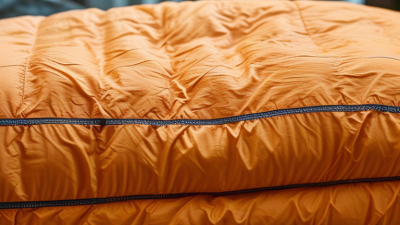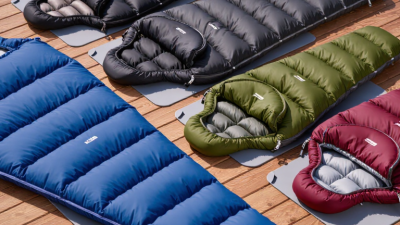
Choosing Good Sleeping Bags for wholesale requires more than comparing prices and printed temperature ratings. Buyers must balance insulation, shell fabric, pack size, durability, safety, and customer expectations. A low unit cost can become expensive when zippers fail, filling compresses, or returns increase.
Market data supports careful planning. Grand View Research identifies steady growth in the global sleeping bags market, supported by camping, hiking, and outdoor travel demand. The Outdoor Industry Association’s 2024 Outdoor Participation Trends Report also recorded strong participation in outdoor recreation across the United States. These signals suggest opportunity, but they do not guarantee sales for every product. Regional climate and user habits still matter.
Start with verifiable performance. Ask suppliers for laboratory test records based on ISO 23537 or equivalent thermal-testing requirements. Check whether the comfort rating suits real customers, not just extreme conditions. Inspect stitching around the hood, footbox, and zipper. Feel the fabric. Open and compress several samples. A dependable wholesale model should recover its shape after repeated packing. Small details matter.
Good Sleeping Bags should also match the selling channel. Lightweight down bags may suit backpacking stores, while synthetic models often serve family camping and rental markets. Confirm fill composition, fabric weight, carton dimensions, and minimum order quantities. Request production samples before approving bulk goods. I have learned that attractive photographs can hide weak construction. No spreadsheet reveals everything. A practical review should combine supplier documents, hands-on inspection, customer feedback, and realistic margin calculations. Some assumptions may be wrong, so test limited quantities before scaling.
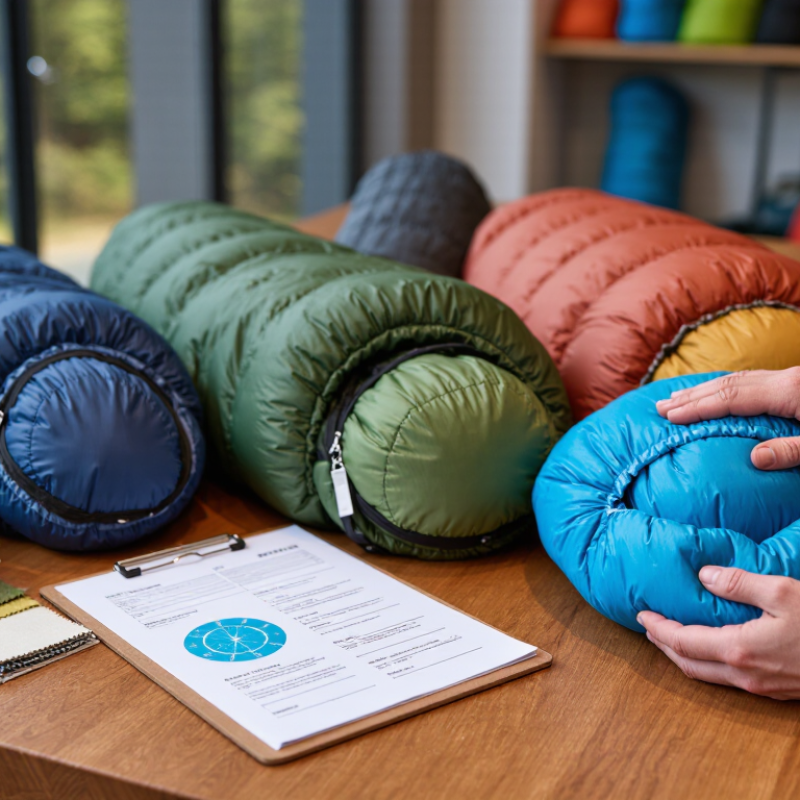
Wholesale sleeping bags should begin with a clear requirement sheet, not a supplier catalogue. Define the expected order volume, price range, packaging method, and delivery schedule. Then specify temperature ratings for the intended climate. A summer bag for humid camps needs different insulation from a winter bag used near freezing conditions. Small details matter.
Target users should guide every measurement. Children need shorter lengths, lighter fills, and safe zipper designs. Backpackers usually prefer compact bags under a practical weight limit. Family campers may value wider shapes, washable fabrics, and simple storage. For outdoor workers, durable stitching and moisture resistance can matter more than appearance. Ask how users sleep, move, and carry equipment.
Sample testing remains essential. Check warmth in a cool room, zipper movement with gloves, seam strength, and compression recovery. Measure the packed size yourself. Product sheets can be optimistic. I once judged a bag by its listed weight and overlooked its bulky packing shape. That mistake affected transport costs. A better process compares samples with real user feedback and records each weakness. Requirements may still change after testing, and that is acceptable. Reliable wholesale decisions improve through evidence, not assumptions.

When choosing sleeping bags for wholesale, compare insulation before comparing colors or packaging. Down insulation is lightweight, highly compressible, and warm in dry conditions. However, it loses much of its insulating power when wet. Synthetic insulation dries faster and usually costs less. It also performs more reliably in damp campsites. For mixed customer needs, a balanced inventory may include both types. A common mistake is treating lower price as better value.
Temperature ratings need careful reading. A comfort rating shows when most users may sleep comfortably. A lower-limit rating describes the coldest temperature for a standard sleeper. The extreme rating is not a normal purchasing target. It indicates survival conditions, not comfortable rest. Ask suppliers for laboratory testing details and rating standards. Ratings can still vary with clothing, sleeping pads, body size, and personal metabolism.
Tips: Match products with local seasons and customer habits. Lightweight summer bags suit warm regions and indoor backup use. Three-season bags usually cover spring, autumn, and mild winter nights. Winter bags require stronger insulation, draft collars, and practical hoods. Check packed size with real cartons, not only product specifications. Request samples before placing large orders. Test zippers, stitching, loft recovery, and moisture resistance. A sample may reveal awkward zipper pulls or insufficient foot space. Seasonal demand is also easy to misjudge, especially when weather patterns change.
For wholesale sleeping bags, fabric choice should balance durability, weight, and moisture control. The Textile Exchange Materials Market Report 2024 placed polyester at roughly 57% of global fiber production in 2023. That scale supports stable sourcing, but not every polyester shell performs equally. Check denier, weave density, coating quality, and tear resistance. A tightly woven shell feels smoother and better resists campsite abrasion. Recycled fibers may support sustainability goals, yet suppliers should verify recycled content and test consistency. Claims without documents are weak evidence.
Construction quality often decides whether a product survives repeated rental or retail use. Inspect baffle stitching, hood seams, zipper guards, and drawcord anchors. Continuous stitching can leak insulation. Box or offset baffles usually reduce cold spots, though they may increase cost. Review laboratory reports for thermal ratings under ISO 23537 testing conditions. The Outdoor Industry Association’s 2024 report recorded 175.8 million U.S. outdoor participants in 2023. That broad demand makes reliable construction commercially important. Still, a report does not replace hands-on inspection.
Size must match real users, not only carton measurements. A narrow bag saves fabric but restricts shoulders and traps less warm air. A wide bag improves movement but may reduce thermal efficiency. Measure shoulder, hip, and foot dimensions separately. Add practical comfort features, such as an insulated draft collar, two-way zipper, foot ventilation, and a soft hood adjustment. Touch the lining after washing. It may feel different. I would sample several sizes before placing a large order, because one overlooked zipper snag can create costly returns.
| Evaluation Dimension | Recommended Wholesale Specification | Why It Matters | Quality Indicators to Check | Suitable Use | Overall Assessment |
|---|---|---|---|---|---|
| Outer Fabric | 20D–40D nylon or 210T polyester with a tightly woven surface | Balances tear resistance, weight, abrasion performance, and purchase cost. | Even weave, smooth surface, consistent color, low fabric odor, and no skipped threads. | Camping, travel, outdoor retail, and general seasonal use | High priority |
| Water Resistance | Durable water-repellent treatment or a tightly woven shell; avoid relying on fabric coating alone | Helps protect insulation from light moisture, condensation, and damp storage conditions. | Water should bead briefly on the shell; coating should not feel excessively sticky or crack when folded. | Humid environments and occasional outdoor use | Important |
| Lining Fabric | Soft polyester pongee, brushed polyester, or breathable cotton-blend lining | Directly affects skin comfort, moisture management, and perceived product quality. | Soft hand feel, colorfastness, secure seams, and no rough fibers or irritating finishes. | Family camping, hospitality, and comfort-focused products | High priority |
| Insulation Type | Hollow-fiber synthetic fill for value and moisture tolerance; responsibly sourced down for low weight and compactness | Insulation determines warmth, packability, drying speed, and wholesale price positioning. | Even fill distribution, no cold spots, stable loft after compression, and clear fiber or down specifications. | Choose synthetic for humid conditions; down for lightweight premium ranges | Critical |
| Insulation Weight | Approximately 800–1,500 g for three-season synthetic adult bags, depending on target temperature | A higher fill weight generally improves warmth but increases packed size and shipping weight. | Confirm fill weight separately from total product weight and request a sample for loft comparison. | Three-season adult sleeping bags | Critical |
| Temperature Information | Provide comfort, lower-limit, and extreme ratings according to a recognized testing method such as ISO 23537 | Standardized ratings make products easier to compare and reduce misleading warmth claims. | Rating label, test method, user guidance, and realistic seasonal positioning should be consistent. | Retail packaging and wholesale product catalogs | Critical |
| Stitching Quality | Uniform lockstitch or reinforced stitching at stress points, with clean thread trimming | Strong construction reduces seam opening, insulation leakage, and warranty issues. | Even stitch length, reinforced hood and zipper areas, no skipped stitches, and no loose thread tails. | All product categories | Critical |
| Baffle Construction | Quilt-through construction for economical mild-weather bags; separated baffles for improved warmth retention | Baffles help keep insulation evenly distributed and reduce cold spots. | Consistent chamber size, no visible gaps, secure internal seams, and uniform filling throughout. | Quilt-through: entry level; separated baffles: cooler conditions | High priority |
| Zipper System | Two-way zipper with a protective draft tube and an anti-snag zipper guard | A smooth zipper improves usability and reduces returns caused by snagging or poor closure. | Run the zipper repeatedly on samples; inspect pull strength, alignment, tape quality, and draft protection. | Frequent-use outdoor and rental products | High priority |
| Hood and Draft Collar | Adjustable hood with a drawcord; draft collar recommended for cooler-weather models | Heat loss is significant around the head and neck, especially in lower temperatures. | Smooth cord adjustment, secure toggles, comfortable edge binding, and adequate face opening. | Three-season and cold-weather sleeping bags | Important |
| Adult Length | Regular length: approximately 190–200 cm; long length: approximately 205–220 cm | The correct length prevents compression of insulation and improves sleeping comfort. | Measure internal usable length, not only the external shell measurement. | General adult sizing and tall-user options | Critical |
| Shoulder and Foot Width | Rectangular: about 75–85 cm shoulder width; mummy: typically narrower with a shaped footbox | Roomier designs improve comfort, while mummy shapes reduce air volume and improve thermal efficiency. | Check internal dimensions, footbox shape, zipper clearance, and freedom of movement. | Rectangular for comfort; mummy for warmth and compact packing | High priority |
| Packed Size | Provide compressed dimensions and packed volume; use a compression sack only when appropriate for the fill | Packed size affects shelf presentation, transport cost, and customer convenience. | Compress a production sample several times and compare recovery, seams, and storage-bag fit. | Travel, backpacking, e-commerce, and logistics planning | Important |
| Weight | Approximately 800–1,200 g for lightweight three-season models; heavier models may exceed 1,500 g | Lower weight supports portability, but excessive weight reduction may compromise warmth or durability. | Weigh finished goods including the storage sack and compare the result with the product specification. | Backpacking, travel, and outdoor activity products | Important |
| Comfort Features | Soft collar, zipper draft tube, interior pocket, footbox, drawcord adjustment, and included storage sack | Small usability features improve customer satisfaction and help differentiate similar wholesale products. | Test every feature for function, durability, cleaning convenience, and safe placement. | Mid-range and premium retail collections | Recommended |
| Care and Maintenance | Clear washing, drying, and storage instructions; synthetic fills are generally easier to maintain than down | Proper care helps preserve loft, hygiene, and service life while reducing product complaints. | Permanent care label, readable instructions, suitable washing guidance, and dry-storage recommendations. | Retail, rental, hospitality, and family-use products | Important |
| Wholesale Quality Control | Pre-production sample approval, in-line inspection, final inspection, and carton drop or compression checks | Consistent inspection reduces size variation, sewing defects, packaging damage, and batch-level returns. | Use measurable tolerances for dimensions, weight, color, fill distribution, zipper function, and packaging. | Medium- and large-volume purchasing | Critical |
How to Choose Good Sleeping Bags for Wholesale?
Supplier reliability should be checked before comparing sleeping bag prices. Request factory details, production capacity, quality procedures, and recent wholesale references. A video call can reveal useful details, such as fabric storage, stitching lines, and packing conditions. Always order samples. One sample is not enough, because production consistency can change.
Certifications need careful review. Check whether testing covers insulation, fabric safety, colorfastness, and children’s products when relevant. Confirm the certificate holder, testing date, and product model. Some suppliers show general documents that do not match the actual sleeping bag. Ask for complete reports, not only attractive certificate images. I once focused too heavily on paperwork and missed uneven stitching around the zipper.
Customization should be written into the quotation. Confirm shell fabric, filling weight, temperature rating, zipper direction, logo method, carton size, and packaging. Request a pre-production sample before approving bulk manufacturing. Small changes can affect warmth and shipping volume. Set clear limits for color differences and measurement tolerance.
Pricing requires more than checking the unit cost. Compare the landed cost, including sampling, customization, cartons, freight, inspection, and possible defect replacement. Ask for tiered prices at different quantities and confirm the minimum order quantity. A very low offer may hide thinner insulation or weaker stitching. Leave room for negotiation, but do not sacrifice test evidence and stable quality for a cheaper figure.
This 100-point procurement benchmark prioritizes supplier reliability, recognized product certifications, customization capability, and pricing transparency. Verify test reports, production capacity, samples, lead times, and total landed cost before placing a wholesale order.
The percentages represent a practical evaluation framework rather than survey results.
How to Choose Good Sleeping Bags for Wholesale?
Wholesale sleeping bags should be judged beyond catalog photos. Request samples in several sizes and inspect stitching, zippers, insulation distribution, and fabric noise. Test them in a cool room, not only under showroom lights. The temperature rating should follow ISO 23537 testing methods, although laboratory results may not match every user’s sleeping habits. According to Grand View Research, the global sleeping bags market is projected to grow steadily through 2030. Demand is rising, but quality expectations are also becoming less forgiving.
Order terms can protect your margin. Confirm minimum order quantities, sample charges, production lead time, inspection rights, and replacement procedures in writing. Ask whether the quoted price includes individual bags, cartons, labels, and export packing. Packaging deserves practical testing. A compressed bag that arrives with damaged stitching creates returns quickly. The Outdoor Industry Association reported 175.8 million Americans participated in outdoor recreation in 2023. That broad participation creates opportunity, but not every buyer needs the same insulation or shape.
Tips: Keep one approved sample from every production batch. Weigh random units and measure packed size. Check carton corners after simulated warehouse handling. Avoid choosing only by the lowest price. No scorecard is perfect. I would also question impressive claims that lack test records. A slightly higher unit cost may reduce complaints, repacking labor, and slow-moving inventory. Still, forecasts are not guarantees. Review sales by season, climate, and customer use before repeating a large order.