For wholesale buyers, choosing the 2026 Best Top Sleeping Bags requires more than comparing catalog prices. A reliable purchasing decision considers insulation type, temperature ratings, fabric durability, pack size, and factory consistency. These details affect returns, customer reviews, and long-term brand trust. A bag rated for 20°F may perform differently in humid conditions. Wholesale buyers should request test data, sample units, and clear care instructions before placing large orders.
Outdoor educator and gear researcher Andrew Skurka often emphasizes, “The best gear is the gear that works for your specific conditions.” This principle fits Top Sleeping Bags selection. A lightweight down bag may attract backpacking customers, while synthetic insulation suits rental fleets, family camping, and damp climates. Look closely at zipper strength, stitching, hood design, and realistic fill weight. Small flaws become expensive at scale.
Not every popular model is a smart wholesale choice. Some attractive products lack dependable sizing or stable supply. That matters. Buyers should compare supplier communication, replacement policies, certifications, and production lead times. Factory samples can reveal uneven seams, cold spots, or misleading packaging claims. Even experienced buyers can overlook regional climate differences. A warmer bag may sell poorly in summer markets, while an ultralight model may disappoint budget-conscious campers. This guide examines practical options for 2026, while acknowledging one uncomfortable truth: no sleeping bag suits every customer, season, or sales channel.
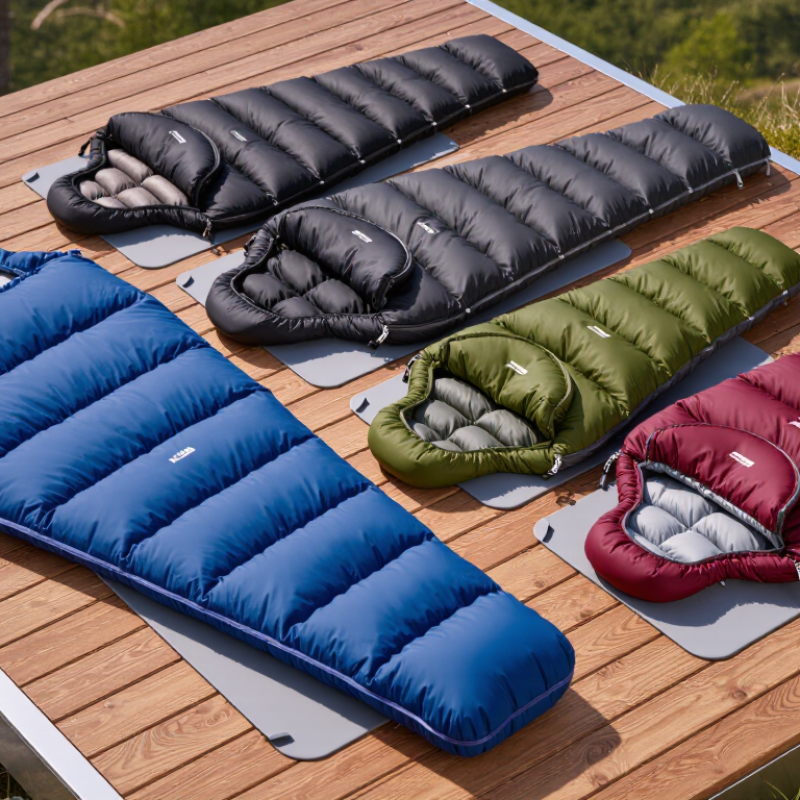
2026 Best Top Sleeping Bags for Wholesale Buyers?
Wholesale buyers in 2026 should rank sleeping bag types by application, not appearance. A warm mummy bag suits backpacking, trekking, and cold-weather rental programs. Its narrow cut reduces packed volume, but may frustrate broad users. Rectangular bags provide easier movement and simple bedding compatibility. They fit campsites, youth programs, and indoor lodging. Double bags serve couples and family campers, but require larger storage bins. Good catalogs need both.
KOA’s 2024 North American Camping Report recorded 57.8 million camping households in 2023. The Outdoor Foundation’s 2024 Outdoor Participation Trends Report counted 175.8 million U.S. outdoor participants during the same year. These figures support varied wholesale demand, not one universal design. For high-turnover fleets, synthetic insulation usually offers faster drying and simpler care. Down insulation compresses better and feels lighter. Yet moisture exposes its weaknesses. This distinction is often underestimated.
Ask suppliers for ISO 23537 temperature testing and clear comfort ratings. Do not rely on marketing warmth claims alone. Request sample testing. Check zippers, stitching, hood cords, and compression recovery after repeated packing. One overlooked issue is storage odor after damp use. Children’s sizes need secure closures and suitable temperature guidance. I would not promise that the highest temperature rating sells best. Some buyers still choose attractive colors over repairability, which deserves more reflection.
| Sleeping Bag Type | Typical Shape | Common Insulation | Typical Comfort Range* | Packed Size & Weight Range | Best Wholesale Applications | Key Buying Considerations |
|---|---|---|---|---|---|---|
| Rectangular Sleeping Bag | Wide, non-contoured profile | Synthetic fiber fill | Approximately 10°C to 20°C | 6–12 L; about 1.0–2.0 kg | Summer camping, family camping, indoor guest use, school outdoor programs | Comfortable and economical, but generally less thermally efficient and bulkier than contoured designs |
| Mummy Sleeping Bag | Contoured hood and tapered footbox | Synthetic or down insulation | Approximately -5°C to 10°C | 4–9 L; about 0.8–1.8 kg | Hiking retailers, trekking operators, outdoor rental fleets, adventure travel | Prioritize hood design, draft collar, zipper quality, footbox room, and independently tested temperature ratings |
| Double Sleeping Bag | Extra-wide two-person design | Synthetic fiber fill, sometimes with separate liners | Approximately 5°C to 15°C | 10–20 L; about 2.0–3.5 kg | Couples’ camping, car camping, family leisure, cabin and glamping accommodation | Check internal width, zipper configuration, compatibility with sleeping pads, and storage-bag dimensions |
| Ultralight Down Sleeping Bag | Slim mummy or semi-rectangular | Down clusters with a high warmth-to-weight ratio | Approximately -5°C to 10°C | 2–6 L; about 0.5–1.1 kg | Backpacking, fast-and-light trekking, premium outdoor retail, guided expeditions | Verify fill power, down-to-feather ratio, moisture management, shell durability, and responsible sourcing documentation |
| Three-Season Sleeping Bag | Mummy or semi-rectangular | Synthetic or down insulation | Approximately 0°C to 10°C | 3–8 L; about 0.8–1.7 kg | Spring-to-autumn camping, hiking, outdoor education, general-purpose retail | A versatile wholesale category; compare insulation distribution, zipper draft protection, and moisture resistance |
| Winter Sleeping Bag | Insulated mummy with hood and draft collar | High-loft synthetic or down fill | Approximately -10°C to -25°C | 7–15 L; about 1.5–3.0 kg | Cold-weather expeditions, mountain tourism, winter camping, emergency preparedness | Demand accurate lower-limit ratings, robust construction, anti-snag zippers, compression storage, and user-safety labeling |
| Kids’ Sleeping Bag | Shorter rectangular or child-sized mummy | Synthetic fiber fill | Approximately 10°C to 20°C | 3–7 L; about 0.6–1.3 kg | Youth camping, school trips, scout programs, sleepovers, family travel | Focus on child-appropriate dimensions, low weight, washable materials, snag-resistant hardware, and clear age guidance |
| Convertible Sleeping Bag | Rectangular bag that opens flat or joins with another bag | Primarily synthetic insulation | Approximately 5°C to 15°C | 6–14 L; about 1.2–2.5 kg | Multi-purpose outdoor stores, rental services, family camping, travel kits | Check zipper compatibility, flat-bed dimensions, conversion steps, and warmth changes when fully opened |
| Camping Quilt | Open-back quilt with footbox and pad attachment system | Down or lightweight synthetic insulation | Approximately 0°C to 15°C | 2–6 L; about 0.5–1.2 kg | Ultralight backpacking, warm-weather trekking, specialty outdoor retail | Requires correct pad use; evaluate strap design, draft control, footbox construction, and customer education materials |
Wholesale buyers should evaluate sleeping bags through measurable performance, not attractive catalog images. Start with temperature ratings, but read the testing method carefully. A bag rated for 0°C may feel different in wind, humidity, or damp ground. Ask suppliers for test reports, filling weight, and loft measurements. Then inspect physical samples. Pinch the insulation near the shoulders and feet. Uneven filling can create cold spots.
Material choices affect durability and comfort. A tightly woven shell should resist light abrasion without feeling stiff. Water-resistant fabric helps, but it cannot replace a dry storage plan. Check zipper strength, snag resistance, hood adjustment, and stitching around stress points. Small details matter. During sample testing, open and close the zipper repeatedly. One difficult pull may become hundreds of complaints after shipment.
Pack size also influences wholesale value. Compare compressed dimensions, recovery after unpacking, and actual product weight. A lightweight bag may sell well, yet thin insulation can reduce customer satisfaction. Bulk buyers should request consistent measurements from several production units, not one perfect sample. Factory data is useful, but field use can reveal weaknesses. Test bags overnight in cool, humid conditions when possible. I would not approve a large order from laboratory figures alone. Supplier communication, replacement procedures, and batch consistency deserve equal attention. Nonuniform stitching is a warning sign.
For wholesale buyers, sleeping bag performance begins with material selection. The 2024 North American Camping Report recorded 57.8 million camping households in the United States. That demand increases pressure for dependable, repeatable products. Nylon ripstop offers strong tear resistance and low weight. Polyester costs less and resists sunlight better. However, its hand feel may seem less premium. The 2024 Materials Market Report from Textile Exchange reported recycled polyester at about 14% of global polyester production in 2023. Recycled fibers can support sustainability claims, but buyers should request transaction certificates and test results.
Insulation requires closer inspection than label claims. Down delivers excellent warmth-to-weight performance and compressibility. Synthetic fill performs more reliably in damp weather and usually costs less. Check fill power, fill weight, loft recovery, and temperature testing. EN ISO 23537 provides standardized methods for measuring sleeping bag thermal performance. A high fill-power figure alone can mislead. A bag with light insulation may still feel cold. Construction also matters. Box-baffle designs reduce cold spots around the torso. Quilted stitching can be cheaper, but compressed seams may create narrow thermal channels. Two-way zippers, draft collars, foot boxes, and durable zipper guards improve practical use.
Tips: Ask suppliers for sample testing after repeated compression, washing, and moisture exposure. Compare warmth after recovery, not only on day one. My own purchasing caution is simple: sustainability claims need paperwork, while comfort needs physical inspection. A small cold seam matters. Include fabric weight, stitching density, zipper quality, and laboratory temperature data in every wholesale specification.
This category benchmark compares common sleeping-bag insulation systems on a 0–100 relative index. Higher scores indicate better performance for the stated buying criterion. Down generally provides superior warmth-to-weight and compressibility, while synthetic insulation offers stronger wet-weather resilience. Actual results vary with fill weight, shell fabric, baffle construction, temperature rating, and testing method.
2026 Best Top Sleeping Bags for Wholesale Buyers
Wholesale Buying Criteria: Quality, Pricing, and Supplier Reliability
Wholesale buyers should test sleeping bags before discussing large quantities. Check the zipper, stitching, insulation, and fabric after repeated handling. A sample should lie flat without thin spots or loose seams. Small defects become expensive customer complaints. Warmth ratings also need careful review because laboratory claims may differ from outdoor use.
Pricing must include more than the unit quotation. Calculate packaging, inspection, shipping, replacement rates, and possible seasonal storage costs. A cheaper bag can create higher expenses if its zipper fails after several uses. Ask for tiered prices at realistic order volumes. Request a written sample policy. Negotiate, but do not remove essential quality checks.
Supplier reliability often appears in small details. Does the supplier answer technical questions clearly? Can they provide material specifications, production photos, and consistent sample measurements? I once saw a promising quotation change after packaging requirements were added. That experience taught me to confirm every cost in writing. Communication records matter. So does production capacity.
Request a pre-shipment inspection before releasing the final payment. Review carton dimensions, color consistency, labels, and packed weight. Keep approved samples for comparison during future orders. A dependable supplier should explain delays early, not after the shipping date. No supplier is perfect. The buyer’s process should allow for mistakes, testing, and honest revision.
In 2026, sleeping bag design is moving toward lighter insulation, adaptable shapes, and clearer performance data.
Wholesale buyers increasingly request recycled shell fabrics, low-bulk synthetic fill, and moisture-resistant construction. These features matter in humid warehouses and unpredictable outdoor conditions. However, lighter does not always mean better. A thin bag may lose warmth after repeated compression.
Temperature labeling is also becoming more practical.
Buyers now compare comfort ratings, lower-limit ratings, and tested filling weights instead of relying on one headline number. I have found that sample testing remains essential.
Place bags in controlled cold rooms, inspect zipper flow, and measure loft after ten compression cycles. Small differences become obvious. A zipper can look smooth but snag near the footbox.
Bulk purchasing is shifting toward flexible assortments.
Retailers often want three temperature ranges, two sizes, and several neutral colors in one shipment. Rectangular designs suit family camping, while mummy shapes support colder travel markets. Packable models need compact storage sacks, but overly tight sacks can damage insulation over time. Buyers should also check stitching density, carton dimensions, moisture barriers, and repair options before confirming volume orders.
Some suppliers now offer modular liners and removable hoods.
These designs improve seasonal use, yet they can increase assembly errors and replacement costs. Minimum order quantities should match realistic sales forecasts, not optimistic guesses.
Market demand changes quickly, and leftover seasonal inventory remains a costly weakness.