How to Choose the Perfect Trekking Bag for Your Next Adventure?
Selecting the right trekking bag is crucial for a successful adventure. Expert outdoor enthusiast, Sarah Thompson, states, "A good trekking bag can make or break your journey." With countless options available, how do you determine which bag best suits your needs?
Choosing a trekking bag involves understanding personal requirements. Consider factors like duration, gear capacity, and comfort. Not every trekking bag will fit every adventure. Sometimes, what looks good might not provide the needed support.
It's essential to reflect on your past experiences. Have you faced discomfort during long hikes? Perhaps you underestimated the importance of proper sizing. The perfect trekking bag balances functionality and comfort. By focusing on quality, you set the stage for an enjoyable trek.
Understanding Your Trekking Needs and Preferences
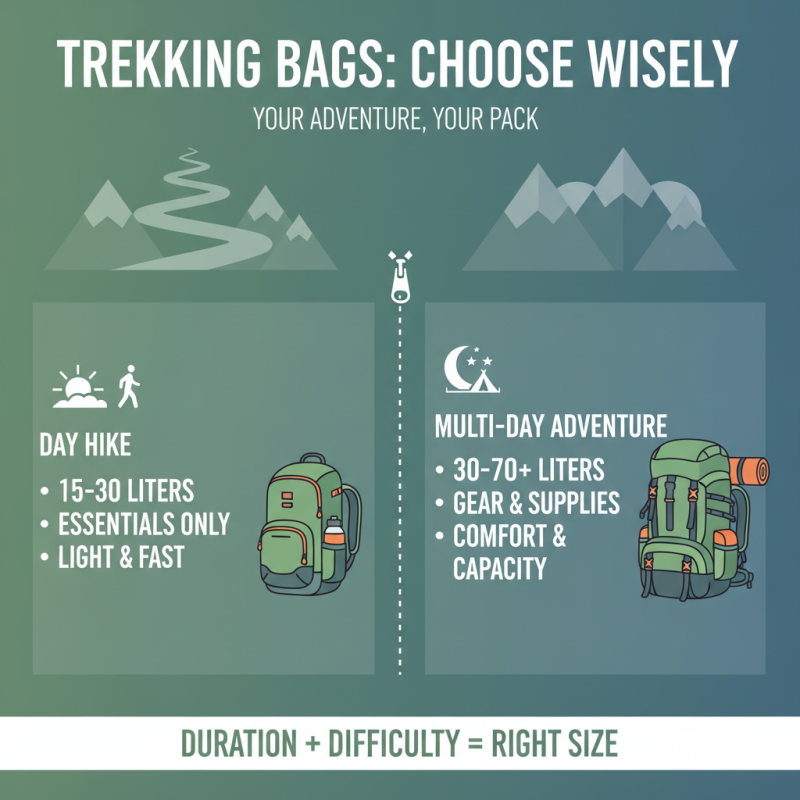
When choosing a trekking bag, it's crucial to understand your specific needs. Think about the type of treks you plan to take. Will it be a day hike or a multi-day adventure? This decision greatly influences the size and features of the bag you need. A daypack typically ranges from 15 to 30 liters, while a multi-day pack can go up to 70 liters. Knowing the duration and difficulty of your trips can help narrow down your options.
Consider your personal preferences too. Do you prefer a minimalist approach or do you like to pack extra gear? A heavier load can be uncomfortable over time. Look for features that matter to you, such as hydration reservoirs or multiple compartments. Reflecting on past trips can offer insights. Were you often searching for things in your pack? Did your bag feel too heavy? Identifying these shortcomings will help guide your choice. It’s about finding balance between comfort and practicality.
Key Features to Look for in a Trekking Bag
Choosing the right trekking bag is essential for a successful adventure. Key features matter significantly. Size is a primary consideration. Research shows that a bag with a capacity of 50 to 70 liters is optimal for multi-day treks. This allows for ample storage without excess bulk.
Weight distribution is crucial. A bag should have padded shoulder straps and a hip belt. A study by Outdoor Industry Association indicates that hikers with well-designed bags experience less fatigue. Comfort contributes to an enjoyable experience on the trail. Look for adjustable harness systems to tailor the fit.
Ventilation is often overlooked but highly important. Mesh back panels can reduce moisture buildup and enhance comfort. A bag with water-resistant material offers protection against unexpected rain. In addition, consider the number of compartments. Multiple pockets help organize gear efficiently. Yet, having too many can add confusion. Reflect on personal needs when assessing these features. Each trekker has unique requirements. Balancing these can lead to a better choice.
Choosing the Right Size and Capacity for Your Trek
When choosing a trekking bag, size and capacity are critical. The right fit can make or break your adventure. It’s essential to understand your needs. Are you planning a short day hike or an extended multi-day trek? For shorter trips, a smaller bag with a capacity of 20-30 liters may suffice. However, longer treks require 50-70 liters to carry more gear comfortably.
Consider the type of gear you bring along. A sleeping bag and cooking equipment take up significant space. If you’re unsure, pack your gear and measure. This will help you visualize how much room you truly need. Also, remember that a heavier load can lead to discomfort. It's a balancing act. Aim for a bag that fits your essentials while remaining lightweight.
Don’t overlook the fit of the bag on your body. Different designs suit various body types. Spend time trying on bags. Adjust the straps and the hip belt. A bag that feels right may not be your best choice if it limits movement. Feel discouraged? That’s a sign to revisit your priorities. Reflect on what’s truly necessary for your adventure, and adjust your choices accordingly.
How to Choose the Perfect Trekking Bag for Your Next Adventure? - Choosing the Right Size and Capacity for Your Trek
| Type of Trekking Bag |
Capacity (Liters) |
Usage |
Best For |
| Daypack |
20 - 30 |
Short hikes and daily use |
Day hikes and city touring |
| Weekend Backpack |
30 - 50 |
Weekend trips |
Short camping trips |
| Trekking Backpack |
50 - 70 |
Multiple day hikes |
Longer treks |
| Expedition Pack |
70+ |
Extended trips |
Expeditions and long-term travel |
Evaluating Comfort and Fit for Your Trekking Bag
Choosing the right trekking bag can significantly impact your adventure. To evaluate comfort and fit, start with the size of the bag. Your torso length is crucial. A bag that’s too high or low can cause discomfort. Make sure to measure accurately.
Try the bag on and adjust the straps. The hip belt should sit comfortably on your hips, not your waist. A proper fit redistributes weight. If the bag pulls on your shoulders, it's not right for you.
Tips: Always load the bag as you would on a trek. Walk around for a few minutes. Pay attention to pressure points. If something feels off during this test, rethink your choice. Additionally, check how the bag breathes. Ventilation is key on long hikes. A bag that traps heat can lead to discomfort.
Material and Durability Considerations for Outdoor Gear
Choosing the right trekking bag involves understanding the materials and their durability. Outdoor gear often faces harsh conditions. A good bag requires high-quality fabric. Nylon and polyester are popular for their strength and lightweight nature. According to the Outdoor Industry Association, about 48% of outdoor enthusiasts prioritize durability when selecting gear.
Water resistance is another critical factor. Many bags incorporate waterproof materials or coatings. This feature protects your gear in wet conditions. A report from the Consumer Product Safety Commission highlights that gear failure can lead to accidents. Ensure zippers and seams are reinforced for added longevity.
Tips: Look for bags with reinforced stitching. Check if the material has UV resistance. Test the zippers before your trip. A well-chosen bag enhances your adventure. Don't overlook small details. Sometimes, overlooked materials can significantly impact your experience. Always reflect on your choices.
Material and Durability Considerations for Trekking Bags