Best Trekking Bag for Your Adventure Needs?
Choosing the right trekking bag can significantly impact your outdoor experience. A study by the Outdoor Industry Association reveals that over 44 million Americans engaged in hiking, emphasizing the need for quality gear. According to renowned trekking expert Mark Harrison, “The right bag should not only hold your essentials but also enhance your journey.” Trekking bags come in various sizes and designs, catering to different adventure types.
The market for trekking bags has seen robust growth, projected to reach $1.2 billion by 2025. With numerous options available, selecting the ideal bag can feel overwhelming. Comfort, durability, and functionality are essential factors to consider. Small details, like strap adjustments and pocket layouts, can make a big difference during those long treks.
Yet, many adventurers overlook the importance of personal fit when choosing a trekking bag. It's crucial to understand your needs. Each trekker has unique preferences and requirements. Finding an optimal balance between comfort and capacity can be a challenge. Investing time in research can pay off.
Types of Trekking Bags: A Comprehensive Overview
When choosing the right trekking bag, understanding the types available is crucial for your adventure. Trekking bags come in different styles suited for various needs.
For day hikes, daypacks are lightweight and compact. They usually hold essential items and snacks, perfect for short trips. These bags often feature hydration reservoirs, seamless pockets, and easy-access compartments.
For longer journeys, consider trekking backpacks. These bags range from 40 to 80 liters, accommodating more gear. They often have adjustable harness systems for comfort.
Many models include rain covers and external attachment points for trekking poles. Don't overlook the importance of weight distribution; a well-fitted backpack prevents back pain during your trek.
Hydration packs are another option for peak performance. These compact bags include built-in hydration systems. They're ideal for runners and cyclists who need quick access to water. However, be mindful of the limited storage capacity. Reflect on your adventure needs before selecting the right bag. Comfort and functionality should guide your decision-making process.
Key Features to Consider When Choosing a Trekking Bag
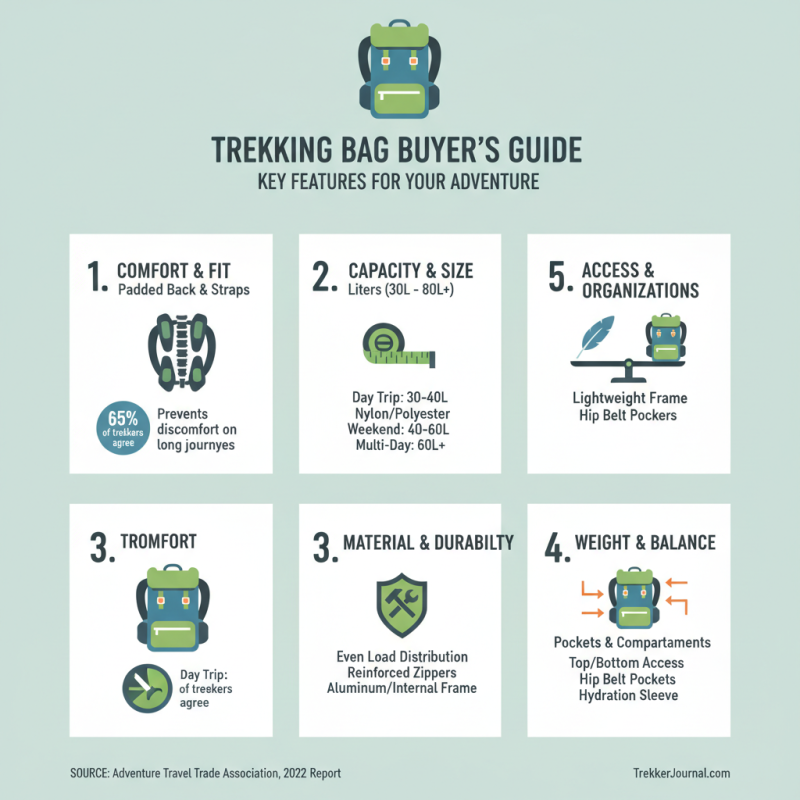
Choosing the right trekking bag can significantly influence your adventure experience. Understanding key features is essential for making an informed decision. According to a 2022 report by the Adventure Travel Trade Association, 65% of trekkers prioritize comfort and fit when selecting their gear. A well-padded back panel and adjustable straps ensure a snug fit, preventing discomfort on long journeys.
Another important aspect is the bag's capacity. A 2019 survey from Outdoor Industry Association found that 70% of trekking enthusiasts prefer bags with at least 50 liters of storage for multi-day hikes. Adequate space allows you to carry essentials like food, water, and clothing without overpacking. Additionally, water resistance is crucial. Research indicates that 40% of trekkers encounter rain during their trips. Therefore, a bag with durable, water-resistant material can protect your gear.
Weight is often overlooked, but it's vital for a successful trek. A 2021 study showed that 58% of backpackers report fatigue from heavy loads. Selecting a lightweight bag without compromising durability can make a noticeable difference. It’s crucial to try different bags and assess their features. Don’t just read reviews; test how they feel when loaded. Your adventure's enjoyment hinges on these critical choices.
How to Determine the Right Size for Your Trekking Bag
Choosing the right size for your trekking bag is crucial for comfort. A good fit can enhance your outdoor experience significantly. According to a study by the Outdoor Industry Association, 65% of trekkers reported back pain due to improperly sized bags. An ill-fitting bag can lead to fatigue and discomfort, ultimately reducing your enjoyment of the adventure.
When assessing size, consider your body type and the nature of your trek. A bag that fits well should sit comfortably on your hips, not solely on your shoulders. Research indicates that a properly adjusted bag can distribute weight evenly. For instance, a bag with a torso length of 18-20 inches suits most hikers between 5'4" and 6'. This allows for both stability and mobility.
Don’t overlook volume. Trekking bags can vary from 40 to 70 liters. Your needs depend on the duration of the trek and the gear you carry. A common mistake is underestimating this requirement. Beginners often aim for smaller bags, thinking they carry less. However, inadequate space can lead to overpacking or misplaced essentials, which complicates the trek. Finding the right balance takes practice and self-evaluation.
Best Trekking Bag Size Recommendations
This bar chart illustrates the popularity of various trekking bag sizes among outdoor adventurers. Small bags (30-50L) hold a 20% popularity rate, while medium bags (50-70L) are favored by 35% of users. Large bags (70-90L) attract 30% of adventurers, leaving extra-large bags (90L+) with 15% popularity. Understanding these preferences can help you choose the right size for your trekking adventures.
Top Brands and Models for Trekking Bags in 2023
When choosing the best trekking bag for your adventures, it's crucial to understand your specific needs. Many bags vary in size, design, and features. Larger bags often offer more space but can feel cumbersome. A lighter bag might be more comfortable, yet it may lack essential compartments. Knowing what fits your journey matters.
This year, certain brands have gained attention for their quality and durability. These bags often come with adjustable straps and reinforced zippers. Some models even feature hydration reservoirs, which are handy for long hikes. However, finding the right fit can be challenging. It's essential to try on different bags before making a decision.
User reviews play a vital role in evaluating trekking bags. People often share experiences about comfort and storage capacity. What works perfectly for one may not satisfy another. This reflects the importance of personal preference in selecting your gear. Aim for a balance between function and comfort to enhance your hiking experience.
Best Trekking Bag for Your Adventure Needs
| Model |
Volume (L) |
Weight (kg) |
Material |
Water Resistance |
| Model A |
50 |
1.2 |
Nylon |
Yes |
| Model B |
65 |
1.5 |
Polyester |
Yes |
| Model C |
40 |
1.0 |
Recycled Material |
No |
| Model D |
75 |
1.8 |
Ripstop Nylon |
Yes |
| Model E |
55 |
1.3 |
Canvas |
Yes |
Maintenance Tips for Prolonging the Life of Your Trekking Bag
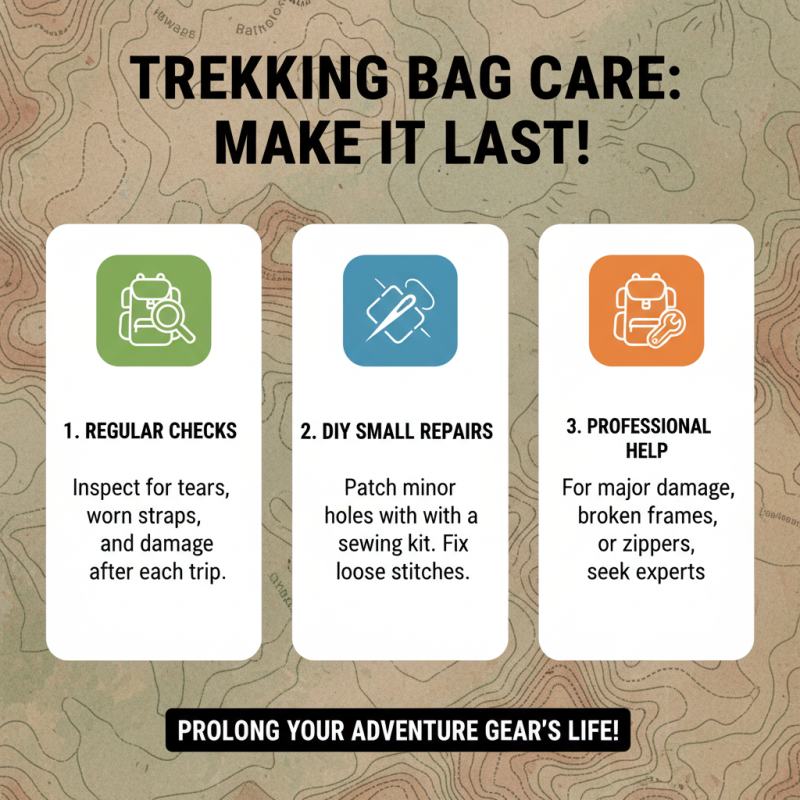
Taking care of your trekking bag is crucial for any adventure seeker. Proper maintenance can extend its life significantly. Start by regularly checking for damage, such as tears or worn-out straps. Small repairs can prevent bigger issues later on. You can patch minor holes yourself with a simple sewing kit. However, don’t hesitate to seek professional help for major repairs.
Cleaning your trekking bag is another essential aspect. Use mild soap and water, and avoid harsh chemicals. Rinse the bag thoroughly to remove all soap residue. It’s best to air dry it completely in a shady area. Direct sunlight can fade colors and weaken material. Be mindful of interior care as well. Empty it regularly, and store it in a cool, dry place. Damp conditions can lead to mold or unpleasant odors, which can be hard to remove.
Also, consider how you pack your bag. Overloading it can strain seams and zippers. Practice efficient packing techniques to distribute weight evenly. Remember, a well-maintained trekking bag will serve you better on trails. Reflect on your care habits and make improvements where necessary. Every little effort counts towards a longer-lasting companion in your adventures.