What Are the Top Types of Tipi Tents in 2026?
Tipi Tents are no longer just roomy shelters for traditional campsites. In 2026, buyers can compare classic canvas models, lightweight backpacking designs, stove-compatible tents, and spacious glamping options. Each type solves a different problem. A family may value standing room and durable fabric, while a hiker may care more about packed weight and setup time. Small details matter: pole layout, door placement, ventilation, and how the tent handles a wet morning.
Outdoor recreation data helps explain the interest, but it needs context. The Outdoor Foundation’s 2023 Outdoor Participation Trends Report estimated that 175.8 million Americans took part in outdoor recreation in 2022. KOA’s 2024 North American Camping Report also tracks changing camping habits and preferences. These reports cover outdoor recreation and camping broadly, not tipi tents specifically. That distinction matters. Broad participation figures show a large outdoor audience; they do not prove that every tipi style is growing at the same rate.
This guide compares the leading tipi tent types by intended use, materials, setup, and practical trade-offs. It also considers features that product descriptions can gloss over, such as condensation, stove-jack placement, and the space needed for guy lines. A tent can look impressive in a product photo. The real test comes when wind shifts or damp gear fills the entry. Not every trip. And not every tent. The best choice depends on where you camp, how you travel, and what you are willing to carry.
How Tipi Tents Are Classified by Structure, Capacity, and Intended Use
What Are the Top Types of Tipi Tents in 2026?
How Tipi Tents Are Classified by Structure, Capacity, and Intended Use
Tipi tents are commonly grouped by frame design, floor plan, and intended setting. Traditional pole models use a central arrangement of upright supports, creating a high peak and open interior. Modern versions may use fewer poles or lighter materials for easier transport. Shape matters. Compare the stated setup dimensions, not just the product label, because usable floor space can narrow near the walls.
Capacity usually describes how many people can sleep inside, but comfort depends on luggage, bedding, and the weather. A two-person shelter may feel cramped when both occupants bring large packs. Family-sized models offer more room, while larger event or base-camp designs can provide standing space and room for gear. Intended use helps narrow the options: lightweight models suit short hikes, while heavier canvas designs are often better for established camps. Ventilation, ground protection, and setup time also matter.
Tips: Check pole materials, seam construction, and ventilation openings before choosing. Look for clear setup instructions, and practice pitching the tent at home. Check the seams. Capacity labels are estimates, not guarantees; personal space needs vary, and manufacturers may measure them differently.
Traditional Canvas Tipis: Central-Pole Design and ASTM F3431-20 Performance Criteria
Traditional canvas tipis use a central pole to support a tall, cone-shaped shelter. The open floor makes room for sleeping mats, low furniture, and gear. Canvas feels substantial and can soften the sound of rain. It also takes time to dry. That matters after a damp weekend.
The central pole simplifies the frame, but stability depends on more than one support. Properly tensioned fabric, secure stakes, and well-positioned guy lines all matter. A poorly pitched tipi may flap, pool water, or feel exposed in gusty weather. Small details count. In 2026, compare construction claims with the test information provided. ASTM F3431-20 sets performance criteria for camping tents, but a reference to the standard alone does not prove a particular model meets every requirement. Ask which tests were performed, under what conditions, and whether results apply to the complete tent. Also inspect seams, vents, and door closures in person when possible. Canvas can be durable, yet heavy and slow to pack. I still find that trade-off easy to underestimate.
Backpacking Tipis: Compare Packed Weight with ISO 811 Water-Resistance Test Results
For backpacking tipis, packed weight matters, but it only tells part of the story. Compare complete packed kits, including poles, stakes, and guylines. A shelter listed at 1.2 kg may weigh more once its required support pole is added. Small details count.
Water-resistance figures need equally careful reading. ISO 811:2018 describes a hydrostatic-pressure test for measuring fabric resistance to water penetration. Results are commonly reported in millimeters of water column. For example, a lab result of 1,500 mm indicates the tested fabric resisted that pressure under the test conditions; it does not certify the whole tent. Seams, floor construction, and aging can change real-world performance. Test the seams.
When comparing tipi models, place packed weight beside the ISO 811 result for the actual canopy fabric, and check whether the floor was tested separately. A higher number can offer more margin in sustained rain, but may come with heavier fabric. I would treat any simple “lightest and driest” ranking cautiously. Test methods describe controlled conditions, not a windy campsite with damp ground and tired hands. ISO 811 results are useful evidence, not a promise of comfort.
Stove-Ready Hot Tents: Check Stove-Jack Placement and Manufacturer Clearance Data
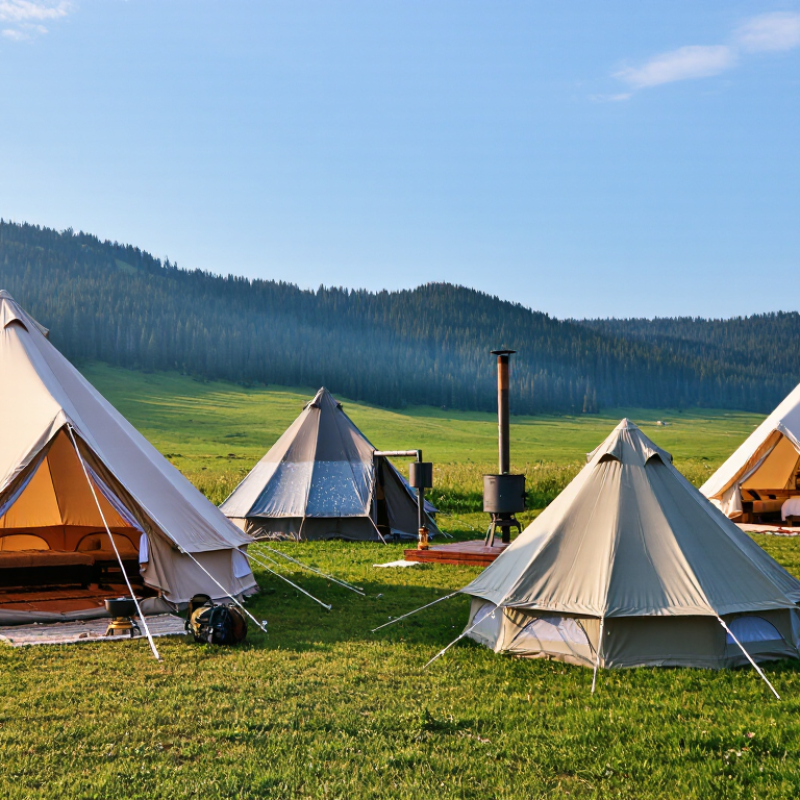
In 2026, a stove-ready tipi tent is defined less by its shape than by the details around its stove jack. Check where the opening sits relative to the peak, walls, door, and sleeping area. A jack placed too close to a sloping panel can leave little room for safe pipe routing. Measure the pipe path before buying, not just the tent footprint.
Read the tent maker’s clearance data alongside the stove and pipe instructions. Required spacing can vary with materials, shields, and stove design; one tent’s numbers cannot safely stand in for another’s. Look for clear guidance on jack dimensions, heat-resistant fabric, and any required protection for nearby panels. If the documents disagree or omit a measurement, ask the manufacturer rather than guessing. Small gaps matter.
Picture a damp, cold evening: gloves are on, the pipe is awkward, and the door keeps shifting in the wind. A well-positioned jack makes setup simpler, but it does not remove the need for ventilation or regular supervision. Keep fabric and gear beyond the stated clearance, and inspect the jack for wear. I would not treat “stove-ready” as a complete safety rating; it is only one feature to verify.
Stove-Ready Hot Tents in 2026: Clearance Benchmarks for Stove-Jack Planning
Residential stovepipe clearance benchmarks are shown for context; they are not tent or tipi specifications.
NFPA 211 residential benchmarks are not a substitute for a tent manufacturer’s instructions. Stove-jack location, pipe configuration, materials, and required clearances vary by tent and stove. Check both manuals, and do not assume a heat shield permits reduced clearance unless the applicable instructions and installation conditions allow it.
Glamping Tipis: Assess Floor Area, Occupancy, and ISO 5912 Test Requirements
A tipi’s floor area should be judged by its usable space, not just its widest measurement. Sloping walls reduce standing room near the edge, while a central pole can interrupt bed placement. Sketch the sleeping layout, then leave space for a doorway, bags, and movement at night. Small details matter. A stated occupancy is not always a comfortable occupancy. Compare the maker’s capacity with the number and size of sleeping mats you plan to use, and check whether the figure assumes no furniture or stored gear. If possible, review a dimensioned floor plan before choosing.
For glamping use, ask whether the exact tent model and configuration were tested against ISO 5912, the standard for camping-tent requirements and test methods. Request the test report or conformity documentation, and check its date, scope, and tested setup. A report for a different size, fabric, or pole arrangement may not describe the tent you will receive. Look for clear product markings and instructions covering setup, care, and safe use. This is not paperwork for its own sake; it helps you understand what was actually assessed. Still, standards testing cannot predict every site condition, and I would not treat a passing report as a promise of comfort in strong wind or persistent rain.
What Are the Top Types of Tipi Tents in 2026? - Glamping Tipis: Assess Floor Area, Occupancy, and ISO 5912 Test Requirements
The figures below are practical planning ranges, not standardized product specifications. Tipi designs and usable floor space vary; confirm measurements and sleeping capacity with the tent’s technical documentation.
| Tipi tent type |
Typical floor area |
Practical sleeping occupancy |
Common use |
ISO 5912 assessment points |
| Lightweight trekking tipi |
About 5–10 m² |
2–4 people |
Backpacking and short trips where low packed weight matters |
Check the applicable tent category, setup instructions, ventilation, fabric performance, and documented test results. |
| Compact single-pole tipi |
About 7–12 m² |
2–4 people |
Weekend camping and simple, open-plan shelter |
Review stability and structural performance, rain resistance, ventilation, and safe use guidance for the complete tent. |
| Mid-size canvas tipi |
About 12–20 m² |
4–6 people |
Family camping and longer stays with room for luggage |
Check material and seam performance, weather resistance, ventilation, and any applicable fire-safety requirements. |
| Large family or group tipi |
About 20–30 m² |
6–10 people |
Group trips or family stays requiring a larger shared space |
Verify test evidence for the specific model and configuration; a larger floor area does not itself establish a certified occupancy. |
| Stove-compatible tipi |
About 12–25 m² |
4–8 people, with less usable space when a stove is installed |
Cool-weather camping where the design is specifically made for a stove |
Confirm that the tent is designed for the stated stove setup; follow clearance, flue, ventilation, and fire-safety instructions. |
| Glamping tipi |
About 20–40 m² |
4–8 people, depending on furnishings and layout |
Longer stays with beds, seating, or other interior furnishings |
Assess the supplied tent as configured, including its intended use, setup, ventilation, weather performance, and applicable safety tests. |
How to interpret the figures
Occupancy is a planning estimate for sleeping and can change with occupants’ size, bedding, door and pole placement, and stored equipment. Sloping walls can make usable space smaller than the stated floor area. ISO 5912 specifies requirements and test methods for camping tents; it does not assign a universal occupant count based only on floor area. Check the current standard’s scope and the product’s test documentation for the intended tent type and setup.