How to Choose the Best Hiking Sleeping Bag for Your Adventure
Choosing the right hiking sleeping bag is essential for outdoor enthusiasts looking to enhance their camping experience. With the growing number of adventurers taking to the trails—over 40 million people in the U.S. engage in hiking annually, according to the Outdoor Industry Association—selecting a suitable sleeping bag has become more crucial than ever. A quality hiking sleeping bag not only ensures a good night's sleep but also contributes to overall safety and comfort during your outdoor excursions.
Recent studies indicate that nearly 70% of campers report improved sleep quality when using a well-insulated and appropriately rated sleeping bag. This highlights the importance of evaluating key features such as temperature ratings, insulation types, and bag shapes to meet individual needs and the conditions expected on the trail. As environmental awareness grows, many hikers are also considering eco-friendly materials and sustainable manufacturing practices when choosing their gear. Understanding these factors will help you make an informed decision and elevate your next adventure significantly.
Understanding the Different Types of Hiking Sleeping Bags
When selecting a hiking sleeping bag, it's essential to understand the different types available to ensure comfort and warmth during your adventure. Generally, sleeping bags can be categorized into two main types: down and synthetic. Down sleeping bags are known for their lightweight and compressible nature, making them ideal for long hikes where weight is a concern. However, they do require careful handling, especially in wet conditions, as they lose their insulating properties when wet. On the other hand, synthetic bags offer better insulation in damp environments and dry faster, making them suitable for varied weather conditions.
When choosing between down and synthetic bags, consider the climate and terrain of your hike. For colder, drier conditions, a down bag may be your go-to option. Conversely, if you're venturing into unpredictable weather, a synthetic bag might serve you better. Additionally, pay attention to the temperature rating of the bag, ensuring it matches the expected temperatures during your trip.
Tips: Always try to pack your sleeping bag in a waterproof stuff sack to protect it from moisture. Additionally, consider the shape of the sleeping bag; mummy bags are great for warmth and lightweight travel, while rectangular bags provide more space and comfort, albeit at an increased weight. Choose what aligns best with your hiking style and sleeping preferences.
Identifying the Ideal Temperature Rating for Your Adventure
When selecting a sleeping bag for your hiking adventure, understanding the temperature rating is crucial. Sleeping bags are typically rated for three types of conditions: warm weather (35°F and above), three-season (20°F to 35°F), and cold weather (20°F and below). The intended use of your sleeping bag should guide your selection. For instance, if you plan to hike in warmer months, a bag rated for 35°F might be sufficient, but be prepared with additional layers if temperatures drop unexpectedly.
In contrast, if your adventure takes you into colder environments, opting for a three-season or cold weather bag is wise. These bags often come with better insulation and are designed to retain body heat more effectively. Additionally, consider the specific climate conditions of your hiking location, including potential nighttime temperature drops. Check weather patterns and forecast data to ensure your gear aligns with your adventure's demands, allowing you to stay comfortable and safe throughout your journey.
Hiking Sleeping Bag Temperature Ratings
This chart illustrates the ideal temperature ratings for different types of hiking sleeping bags suitable for various seasons. Choose a sleeping bag based on the season and expected temperatures of your adventure.
Selecting the Right Insulation Material for Optimal Comfort
When selecting a sleeping bag for hiking, one of the most crucial aspects to consider is the insulation material, as it significantly impacts comfort and warmth. The primary options for insulation include synthetic materials and down feathers.
Synthetic insulation is designed to retain warmth even when wet, making it a reliable choice for humid conditions. According to a report by the Outdoor Industry Association, approximately 60% of hikers prefer synthetic insulation due to its affordability and durability. In contrast, down insulation provides superior warmth-to-weight ratios, ideal for lightweight backpacking. As per a study published by the American Alpine Institute, down sleeping bags often offer a packable solution, with a weight savings of up to 40% compared to their synthetic counterparts.
Choosing the right insulation also depends on temperature ratings. The sleeping bag's temperature rating indicates the lowest temperature at which a user can expect comfort. Research has shown that 90% of backpackers find that sleeping bags that fall within a 20°F (-6°C) to 32°F (0°C) range suit most camping trips in moderate climates.
Additionally, the R-value, indicating the bag's thermal resistance, is a valuable measurement while assessing insulation types. A higher R-value indicates better insulation ability, which is foundational for maintaining body heat during chilly nights in the great outdoors.
Understanding these insulation options ensures that adventurers can select a sleeping bag that enhances their outdoor experience, providing both warmth and comfort when it matters most.
Considering Weight and Packability for Easy Transportation
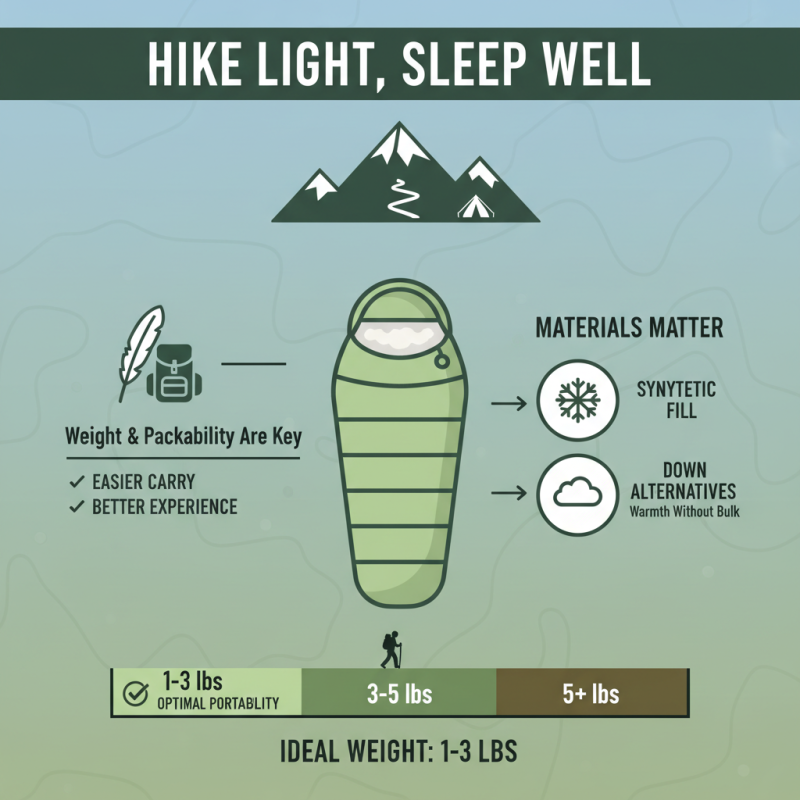
When choosing a hiking sleeping bag, considering weight and packability is crucial for a successful adventure. Lightweight sleeping bags are easier to carry, impacting your overall hiking experience. Look for materials that offer insulation while keeping the weight down, such as synthetic fills or down alternatives, which provide warmth without unnecessary bulk. The ideal weight is subjective and often depends on your personal endurance and the length of your hike, but generally, aim for a sleeping bag that weighs between 1-3 pounds for optimal portability.
Packability is another key factor; a sleeping bag that compresses well can save valuable space in your backpack. Look for bags with a compression sack or those made from lightweight, compressible materials. A good rule of thumb is to choose a bag that can be stuffed into a small pouch, allowing more room for other essential gear.
**Tips:** Prioritize bags that offer a good balance between insulation and weight. Always check the compression size and ensure that it fits comfortably within your pack. Additionally, consider the temperature rating of the sleeping bag to ensure you’re prepared for the conditions you expect on your hike, while still focusing on minimizing weight and size.
Evaluating Additional Features for Enhanced Functionality
When selecting a hiking sleeping bag, it's essential to consider additional features that can significantly enhance your overall camping experience. Firstly, insulation type plays a crucial role in determining the bag's versatility. Down insulation offers excellent warmth-to-weight ratio, making it ideal for colder conditions, while synthetic materials stay resilient and warm even when damp, making them a practical choice for unpredictable weather. Look for bags offering a combination of insulation types, as this can provide flexibility for various climates and ensure comfort throughout your adventure.
Another important feature to evaluate is the bag's shape and design. Mummy-shaped sleeping bags are highly efficient for heat retention due to their fitted design, while rectangular bags provide more space and comfort, especially for those who prefer to move around at night. Additionally, consider features such as adjustable hoods, draft collars, and zippers designed to minimize heat loss. These elements can greatly enhance functionality, allowing you to customize the sleeping bag to meet your specific needs and preferences, ensuring a restful night's sleep after a long day on the trail.
How to Choose the Best Hiking Sleeping Bag for Your Adventure - Evaluating Additional Features for Enhanced Functionality
| Feature |
Description |
Importance Level |
| Temperature Rating |
Indicates the lowest temperature the sleeping bag is rated for, impacting comfort and warmth. |
High |
| Weight |
The overall weight of the sleeping bag affects portability and ease of carrying on hikes. |
High |
| Packability |
Refers to how small the sleeping bag can be packed, influencing storage during hikes. |
Medium |
| Material |
The fabric and insulation type which impact durability, weight, and warmth. |
High |
| Water Resistance |
Indicates if the sleeping bag offers resistance to moisture, crucial for damp conditions. |
Medium |
| Zipper Quality |
The durability and smoothness of the zipper which affects ease of use. |
Medium |
| Sleeping Bag Shape |
Different shapes (rectangular, mummy) can influence comfort and heat retention. |
Medium |
| Additional Features |
Includes features like draft collars, hoods, and pockets for convenience. |
Low |