How to Choose the Right Hiking Sleeping Bag for Your Outdoor Adventure
Choosing the right hiking sleeping bag is crucial for a successful outdoor adventure. Expert climber Sarah Thompson emphasizes, “A good sleeping bag can make or break your experience in the wilderness.” This statement underlines the importance of selecting a hiking sleeping bag that matches your needs.
When venturing into nature, comfort and warmth are essential. Think about the climate and terrain you’ll encounter. Not all sleeping bags are created equal. For instance, a summer bag won’t keep you warm in winter conditions. However, it might be more lightweight, making it easier to carry on long treks.
Many hikers overlook the fit of their sleeping bag. A bag that’s too large won’t trap heat effectively. Conversely, a tightly fitted bag can restrict movement. These are details that can’t be ignored. Remember, your hiking sleeping bag is a long-term investment in your adventures, so consider each choice carefully.
Understanding the Different Types of Hiking Sleeping Bags
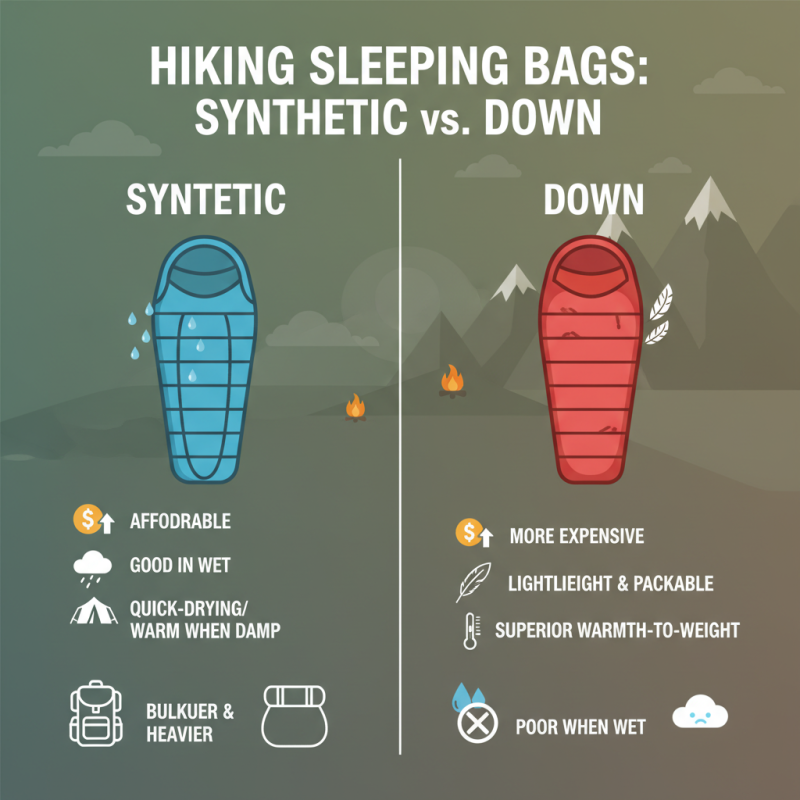
When choosing a hiking sleeping bag, understanding the types can make a significant difference. There are two primary types: synthetic and down. Synthetic bags are often more affordable and perform well in wet conditions. They dry quickly and retain warmth when damp. However, they can be bulkier and heavier.
On the other hand, down sleeping bags are lighter and pack smaller. They provide excellent insulation but lose their warming properties when wet. Many find them more comfortable, but they come at a higher price. Consider the climate of your hiking destination. A colder environment might require a down bag, while humid areas may favor synthetic.
Temperature ratings are essential. Checking them ensures you stay warm enough at night. Many bags list a "lower limit" and "comfort" rating. This can be confusing. If uncertain, opt for a bag rated lower than expected temperatures. It's wise to test the bag before an adventure. Lay in it at home. Make sure it feels right. Small details matter. Look for features like draft collars or zipper baffles. They can improve your experience significantly.
Key Features to Consider When Selecting a Sleeping Bag
Choosing the right sleeping bag can greatly impact your hiking experience. Temperature rating is vital. It helps determine how warm the bag will keep you. Look for bags that list their rating clearly. Different bags suit different climates. You might regret a choice in extreme temperatures.
Material also matters. Synthetic insulation is easier to dry and maintain. Down insulation is lighter but can be tricky in wet weather. Think about where and how you camp. Weight is another consideration. If you’re backpacking, every ounce counts.
Don’t overlook the shape of the bag. Mummy bags are snug and keep heat well. Rectangular bags offer more room. Think about your sleeping style. Lastly, check the size. A too-small bag will feel cramped. A too-large bag might not keep you warm. Reflect on your needs before making a decision.
Key Features to Consider When Selecting a Sleeping Bag
Assessing Temperature Ratings for Your Hiking Conditions
When choosing a hiking sleeping bag, temperature ratings are crucial. These ratings indicate the lowest temperature at which a bag can keep you warm. Misjudging these ratings can lead to a chilly night. For instance, if a bag is rated for 20°F, it might not be comfortable at lower temperatures, especially with wet conditions.
Consider the climate and elevation of your hiking destination. High altitudes can drop temperatures unexpectedly. A bag rated for cool weather may leave you shivering if temperatures plummet. Also, a bag that feels comfortable at night could feel too warm during the day. It’s essential to assess your personal comfort level, as that varies widely among hikers. Testing the bag at home can help you gauge its warmth.
Remember, insulation materials also play a role. Down is lightweight and compressible but may not perform well when wet. Synthetic insulation, while heavier, often dries faster and retains warmth even when damp. The choice requires reflection on personal needs and possible hiking scenarios. Adjusting expectations based on these factors can greatly enhance your outdoor experience.
How to Choose the Right Hiking Sleeping Bag for Your Outdoor Adventure - Assessing Temperature Ratings for Your Hiking Conditions
| Sleeping Bag Type |
Temperature Rating (°F) |
Weight (lbs) |
Pack Size (inches) |
Ideal Conditions |
| Down Insulated |
20°F |
2.5 lbs |
12 x 6 |
Cold and dry conditions |
| Synthetic Insulated |
30°F |
3.0 lbs |
14 x 7 |
Wet and humid conditions |
| 3-Season |
15°F |
2.8 lbs |
13 x 6 |
Spring, summer, fall |
| Summer Lightweight |
40°F |
1.5 lbs |
10 x 5 |
Warm weather |
| Expedition |
-10°F |
5.0 lbs |
15 x 8 |
Extreme cold conditions |
Evaluating Size and Weight for Portability on the Trail
When choosing a hiking sleeping bag, size and weight are critical. According to a recent report by the Outdoor Industry Association, over 60% of outdoor enthusiasts prioritize portability. A lighter bag can significantly enhance your hiking experience. A typical three-season sleeping bag weighs between 2 to 3.5 pounds. For longer hikes, every ounce counts.
Consider the dimensions of the bag. A compact sleeping bag can compress to a size as small as 10 liters. However, you may find yourself sacrificing comfort for portability. Many hikers opt for a bag that fits snugly to minimize weight. This means less insulation and warmth retention, especially in cooler temperatures. Always check temperature ratings to ensure the bag suits your climate.
While it's tempting to pick the lightest option available, improper sizing can hinder sleep quality. A too-tight bag can restrict movement, affecting comfort. There’s a fine line between light gear and comfortable sleep. Reflect on your personal needs and how you plan to use the bag. By evaluating size and weight carefully, you can select the right sleeping bag that balances comfort and portability on your adventure.
Choosing the Right Insulation Material for Your Needs
Choosing the right insulation material is crucial for a comfortable night outdoors. Two common types are synthetic and down. Synthetic insulation is versatile and dries quickly. It performs well even when wet. This is a great option for unexpected weather changes. However, it can be bulkier and heavier than down.
Down insulation, on the other hand, offers an excellent warmth-to-weight ratio. It packs down small and is lightweight, making it ideal for backpackers. However, down loses its insulating properties when wet. It also requires careful laundering to maintain its loft.
**Tip:** Consider your environment. If you expect wet conditions, synthetic may be your best bet. If weight and packability are priorities, down is hard to beat.
Remember, personal needs vary. Reflect on the climates you hike in. Think about your own comfort. The right insulation can make or break your adventure.